


Australia Food Trailer Requirements: What To Check Before You Order
If you're thinking about starting a food trailer business in Australia, you're joining one of the fastest-growing parts of the country's food scene. Over 5,000 mobile food businesses operate across Australia right now, and new owners launch every week. Food trailers cost far less to open than a full restaurant, give you the freedom to move between high-traffic locations, and let you test your menu ideas without a huge upfront risk.
But here's the mistake many first-time buyers make: they order a food trailer based on looks or price alone, then find out it doesn't meet local rules. Fixing a non-compliant trailer can cost thousands of dollars, delay your launch by months, or even keep you from ever registering your business. You don't want to spend your startup budget on reworks instead of ingredients and marketing.
At ETODEVICE, we build custom food trailers for customers all over the world, including dozens of happy clients in Australia and New Zealand. We know exactly what rules Australian food trailers need to follow, and we design every build to meet those standards from the start. In this guide, we break down every key requirement you need to check before you place your order, so you can avoid costly mistakes and get your business on the road fast.
The Three Layers of Australian Food Trailer Rules
Australia does not have one single set of rules for food trailers. Instead, you have to follow rules at three levels: national, state/territory, and local council. All three matter, and you need to meet all of them to operate legally.
National Food Safety Standards (FSANZ)
Every food trailer in Australia must follow the Food Standards Code, written and maintained by Food Standards Australia New Zealand (FSANZ). These rules apply no matter which state you operate in, so they are the first things you need to build into your trailer design.
The three most important parts of the code for food trailer owners are:
- Standard 3.2.2: Covers safe food handling, temperature control, and staff hygiene rules
- Standard 3.2.3: Sets rules for how food trailers are built, including water systems, equipment, and waste disposal
- Part 1.2: Requires you to share allergen information and basic product details with customers
For your trailer build itself, Standard 3.2.3 sets non-negotiable rules:
- Dedicated handwashing basin with warm running water, soap, and single-use paper towels
- Separate potable fresh water tank and grey water (wastewater) tank
- Food-grade, easy-to-clean surfaces for all food prep areas
- Refrigeration units that can hold potentially hazardous food at 5°C or colder
- Hot-holding equipment that keeps cooked food at 60°C or hotter
- Adequate ventilation to remove cooking fumes and heat
If your trailer does not meet these base rules, it will fail inspection in any state or territory.
State and Territory Licensing Rules
Each Australian state and territory has its own food safety laws and licensing process. While they all follow the national FSANZ code, they each have their own application steps, paperwork, and extra requirements.
Here's what to expect across most states:
- All require you to register your food business through the local council where your trailer is stored
- Most mandate a Food Safety Supervisor certificate if you sell unpackaged, high-risk food like cooked meals, dairy, or raw ingredients
- Victoria uses a state-wide online portal called Streatrader for registration, and requires a Statement of Trade for every council area you work in
- New South Wales, Queensland, Western Australia, and other states handle licensing through local councils, with a mandatory vehicle fit-out inspection before approval
The key takeaway: always check the specific rules for your state before you finalize your trailer design. Small differences in requirements can lead to big rework costs if you miss them.
Local Council Trading Rules
Even if your trailer meets national and state rules, you still need permission from the local council to sell food in their area. Each council sets its own rules for where, when, and how food trailers can operate.
Common local council requirements include:
- Approved trading zones and banned areas (for example, near schools, hospitals, or busy intersections)
- Limits on operating hours
- Required waste disposal plans for food scraps, grease, and grey water
- Noise limits for generators and cooking equipment
- Minimum public liability insurance amounts
Many new owners are surprised by how much council rules vary. A trailer setup that works perfectly in one council area might not be allowed in the next one. If you plan to operate in multiple areas, check the rules for every council on your list before you order.
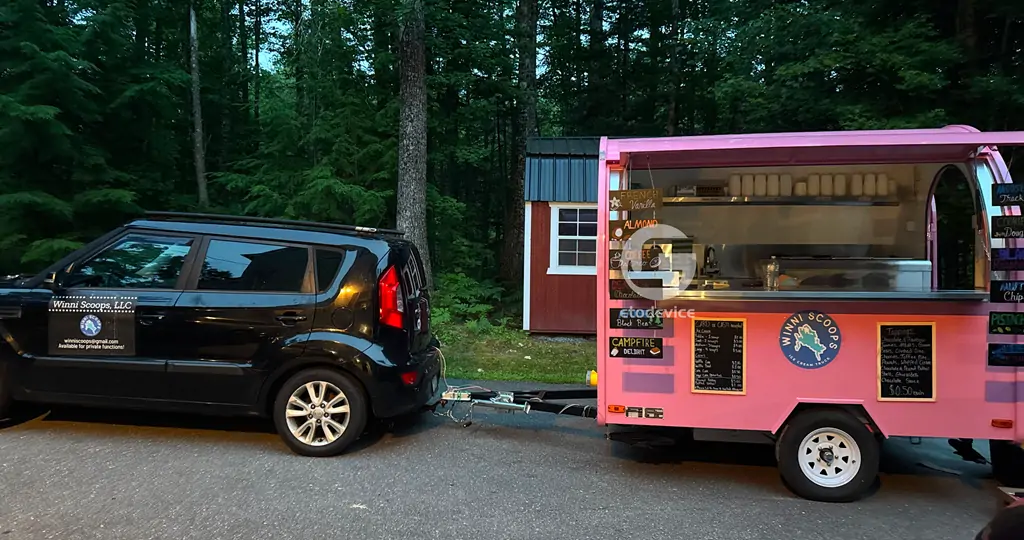
Road Registration and Vehicle Safety Requirements
A food trailer is not just a mobile kitchen - it is also a road vehicle. You need to register it for legal towing, just like any other trailer. This is another area where cheap, uncertified trailers often fail.
Basic Registration Requirements
To register your food trailer in Australia, you apply through your state's transport authority. You will need to provide:
- Proof of purchase for the trailer
- A valid Vehicle Identification Number (VIN)
- Proof of insurance
- Owner identification
You will also need a current roadworthy certificate, which you get after a formal safety inspection. Registration must stay active at all times, and you must display your licence plates clearly on the trailer.
Safety Inspection Checks
Every state requires a safety inspection before you can register a food trailer. Inspectors check core road safety features:
- Brakes: Working, effective brakes are required for all trailers over a set weight limit
- Lights and signals: All taillights, turn signals, and brake lights must work properly
- Tires and suspension: Tires must be in good condition, and suspension must meet safety standards
- Weight limits: Your fully loaded trailer (including equipment, food, and water) must stay within the legal maximum weight for its class
- Size limits: Most areas cap trailer width at 2.5 meters, with set limits for total length
If your trailer is too heavy, too wide, or has broken safety features, you will not pass inspection and cannot register it.
Gas and Electrical Compliance
Gas and electrical systems are two of the most common reasons food trailers fail inspection. Australian rules have very strict standards for both, and only licensed workers can certify them.
- Gas systems: All LPG installations must meet AS/NZS 5601.1 standards. Gas bottles must sit in a vented, sealed cage that vents air outside the trailer cabin. Every joint and regulator must be pressure tested and certified.
- Electrical systems: All fixed electrical work needs an Electrical Compliance Certificate. Your build must include RCD protection for all power circuits to prevent electric shock.
At ETODEVICE, we design all gas and electrical systems to meet Australian standards from the start. We work with certified technicians to test every part of the build, so you get a trailer that passes inspection on the first try. No expensive reworks, no launch delays.
Key Food Safety Build Features to Spec Before Ordering
When you order a custom food trailer, you get to pick every feature. To make sure your build meets Australian rules, make sure these items are part of your design plan before you sign off.
Water and Waste Systems
Water rules are non-negotiable for food trailer approval. The number one rule: your grey water tank must hold at least as much water as your fresh water tank. You cannot dump grey water on the ground or down storm drains - you have to empty it at approved council dump points.
Other required water features:
- Fresh water tank: At least 60L for small operations, but 100–150L works better for full days of service
- Separate handwash sink: You cannot use the same sink for handwashing and food prep. Most councils require a foot-pedal tap for handwash sinks, so you don't touch the handle with dirty hands
- Prep and wash sinks: Minimum two compartments, ideally three for washing, rinsing, and sanitising
- Hot water system: Water must reach at least 60°C at the tap for proper sanitisation
Refrigeration and Temperature Control
Australian summers are hot, and a sealed metal trailer gets even hotter. Domestic fridges will not keep food at safe temperatures in that heat - you need commercial-grade refrigeration.
For compliance and reliability:
- Choose commercial fridges and freezers sized 25–30% larger than what you would use in a regular small kitchen. The extra capacity makes up for the heat inside the trailer.
- Set fridges to hold 1–4°C (well under the 5°C legal limit) and freezers to -18°C or colder.
- Add extra portable coolers as backup for busy days or long transport trips.
Food Prep Surfaces and Layout
All surfaces that touch food must be made of food-grade stainless steel. It is easy to clean, does not hold bacteria, and stands up to daily washing and the vibration of towing.
Your layout should also separate raw food prep areas from cooked food areas to prevent cross-contamination. This is a common check point during health inspections.
Required Safety Equipment
Every food trailer needs a full set of safety equipment to pass inspection. You should not have to add these after delivery - they should come standard in a compliant build.
Mandatory safety items for Australian food trailers:
- Class F wet chemical fire extinguisher within 2 meters of all cooking equipment
- Class E (CO₂) fire extinguisher near the electrical panel
- Wall-mounted fire blanket next to the cooking line
- Photoelectric smoke alarm inside the cabin
- First aid kit that meets Australian standards, mounted at eye level near the door
- Non-slip rubber floor mats in cooking areas
- A second emergency exit you can reach easily from the cook position
Business and Insurance Requirements You Can't Skip
Your trailer build is only part of the requirements. You also need the right business paperwork and insurance to operate legally.
Business Setup Basics
First, you need to set up your business officially:
- Apply for an Australian Business Number (ABN) for tax and business identification
- Register your business name with ASIC if you don't trade under your personal name
- Register for GST if you expect to make $75,000 or more per year
You will also need a Food Safety Supervisor (FSS) certificate if you sell unpackaged, potentially hazardous food. This is a nationally recognised certification that stays valid for five years. At least one staff member on every shift must hold this certificate.
Mandatory Insurance Types
Almost every council and event organiser will ask for proof of insurance before you can trade. The three core types you need are:
- Public liability insurance: Most councils require at least $10 million in coverage, and some ask for $20 million. It covers claims for injuries or property damage caused by your business.
- Product liability insurance: Protects you if a customer gets sick from eating your food.
- Commercial vehicle and equipment insurance: Covers damage to your trailer, kitchen equipment, and stock from accidents, theft, or fire.
Event and Temporary Permits
If you plan to sell at markets, festivals, or community events, you will need more than just your regular food business licence. Most events require a separate temporary permit, either from the event organiser or the local council. Some large events also have extra rules for waste, noise, and power use.
Common Mistakes to Avoid When Ordering a Food Trailer for Australia
We have seen many new buyers run into avoidable problems when ordering their first food trailer. Here are the most common mistakes to skip:
1. Buying the cheapest trailer you can find: Low-price overseas trailers often cut corners on materials and build quality. Most do not meet Australian standards, and fixing them can cost more than you saved on the initial purchase.
2. Skipping council research before ordering: If your local council bans gas generators or requires specific waste systems, you will have to pay extra to modify your trailer after delivery.
3. Using domestic kitchen equipment: Home fridges, ovens, and sinks do not meet food safety rules and will not hold up to daily use in a mobile trailer.
4. Ignoring weight limits: If your fully loaded trailer is over the legal weight limit, you cannot register it and you risk heavy fines if you tow it on public roads.
At ETODEVICE, we help you avoid all these mistakes. When you work with us, we ask about your state, local council, and menu first. Then we design your trailer to match every local rule, so you don't have to guess or fix issues later.
How ETODEVICE Makes Your Australian Food Trailer Build Simple
At ETODEVICE, we are a professional custom food trailer manufacturer with over 10 years of experience building high-quality mobile food businesses for customers around the world. We offer everything from small food carts and coffee trailers to full-size catering trailers and container kitchens.
When you order from us for the Australian market, you get:
- Free custom design: Our design team works with you to create a kitchen layout that fits your menu and workflow. Every part of the build is planned to meet Australian food safety and road rules.
- Compliance-first construction: We use only food-grade stainless steel for all prep surfaces, commercial-grade refrigeration built for hot climates, and gas/electrical systems designed to meet Australian standards.
- Fast, reliable build times: Most custom trailers are finished in 15 to 30 days, with full quality testing before shipping.
- Full support from start to finish: We walk you through every step, from initial quote to delivery. We can also connect you with import partners to make customs clearance smooth.
- Local agent support: We have an official agent in New Zealand who helps customers across Australia and NZ with questions and after-sales support.
If you are ready to order a food trailer that meets all Australian requirements and passes inspection on the first try, visit our website to request your free custom quote and design consultation.
Final Thoughts
Starting a food trailer business in Australia is an exciting way to turn your food ideas into a real business. But success starts long before you serve your first customer - it starts with ordering a trailer that meets every rule and requirement.
Take the time to check national food safety standards, state licensing rules, local council requirements, and road registration rules before you place your order. That small upfront effort will save you thousands of dollars in reworks and get you on the road months faster.
At ETODEVICE, we build every trailer with compliance in mind, so you can focus on what matters most: making great food and growing your business.
No Information


