


How to Start a Dessert Cart Business
According to IBISWorld, the U.S. dessert stores industry hits $20.4 billion in market size in 2026, and the broader mobile food service sector is projected to grow at a 7.5% annual rate through 2033 - outpacing traditional brick-and-mortar food service by a noticeable margin. From flaky pastries and creamy macarons to handcrafted ice cream and nostalgic treats, desserts attract customers of all ages: families grabbing a snack at the park, office workers picking up an afternoon pick-me-up, and couples ordering custom sweets for their weddings all drive steady demand.
If you've ever dreamed of turning your love for baking and sweet treats into a profitable business, a dessert cart is one of the lowest-risk, most flexible ways to get started. In this guide, we'll cover everything you need to launch and grow a successful dessert cart business, from early planning to daily operations.
Key Considerations Before Starting a Dessert Cart Business
Before you buy your first batch of ingredients, take time to work through these core details. They'll help you avoid costly missteps and set your business up for long-term success.
Target audience
Desserts have broad appeal, but narrowing down your core customers will make your menu and branding much more effective. Are you targeting families with kids at parks and festivals? College students on campus? Wedding and corporate event planners? Or downtown shoppers looking for a quick treat? Think through their flavor preferences, dietary needs (vegan, gluten-free, nut-free options), and price sensitivity, then build your offerings around what they actually want.
Market and demand
Do some local research to figure out which desserts are already popular - and which gaps you can fill. Pay attention to where people already buy sweets: weekend farmers markets, downtown street fairs, beach boardwalks, or office park lunch hours. This will tell you the best locations to set up, the busiest times to operate, and which menu items are most likely to sell.
Competitors
Look at other dessert carts, ice cream trucks, bakeries, and coffee shops in your area. Note their pricing, menu variety, branding, and how they interact with customers. Your goal isn't to copy them - it's to find your unique angle. Maybe you'll specialize in nostalgic retro desserts, all-vegan baked goods, or fancy mini pastries for events. A clear unique selling point will help you stand out right away.
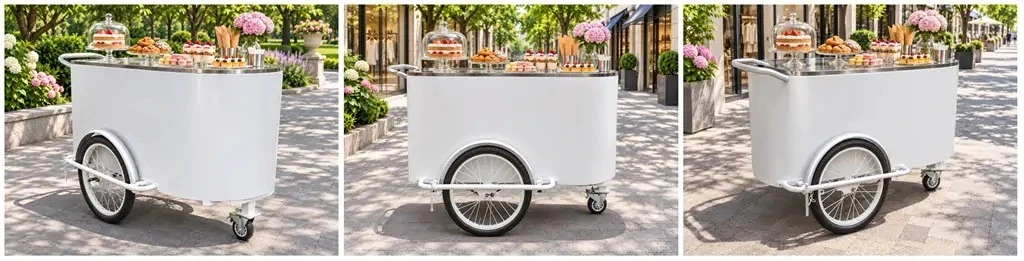
Physical shop vs. mobile dessert cart
Opening a mobile dessert cart costs far less upfront than a physical storefront. You skip expensive rent, major renovations, and high utility bills, and you can launch in weeks instead of months. The biggest advantage is flexibility: you can move to wherever the crowds are, from busy city sidewalks to wedding venues and holiday festivals. Compact carts in particular have a small footprint but huge business potential - they fit into tight spaces that larger trucks can't reach.
Your Dessert Cart Business Plan
A clear business plan is your roadmap. It keeps you focused, helps you spot challenges early, and makes it easier to secure funding if you need it. Here's what to include:
Business goals and objectives
Set realistic short-term and long-term goals. For example, you might aim to build a base of 150 regular customers in your first month, book five private events in your first quarter, or break even within the first year. Keep targets measurable and achievable so you can track your progress.
Budget and financial projections
List out all your startup costs: your cart and any customizations, licenses and permits, equipment like display cases or mini fridges, initial inventory, and marketing materials. Then map out ongoing expenses: ingredients, packaging, fuel or transportation, insurance, and restocks. Finally, estimate your monthly revenue based on your pricing and expected sales volume.
Working with a direct manufacturer can help you keep startup costs under control. Many reputable builders, including ETO DEVICE, offer factory-direct pricing and free design quotes, so you get a custom-built cart without paying retail markup.
Pricing strategy for your desserts
Aim for at least a 50% profit margin on all regular menu items - this is standard for mobile food businesses. For custom event orders, wedding dessert spreads, or holiday gift boxes, you can charge 15–25% more to account for extra prep and customization. Bundle deals (like "3 cookies for $8" or a sampler pack) are also a great way to boost average order size.
Marketing and promotional strategies
Outline how you'll get the word out. A mix of online and offline tactics works best: social media posts showing off your treats, a simple website with your schedule and booking info, flyers in high-traffic areas, and partnerships with local event organizers and nearby businesses.
How to Start a Dessert Cart Business: Step-by-Step
Starting a dessert cart is straightforward, but it pays to do each step carefully. Follow this guide to launch smoothly and legally.
1. Handle all legal requirements
Get your paperwork in order before you start selling:
- Pick a catchy, memorable business name that matches your brand vibe.
- Choose a legal structure (most new owners start with a sole proprietorship or LLC).
- Register your business with local and state authorities.
- Apply for all required permits: a general business license, health department permit, street vendor permit, and any zoning permits for your planned locations.
- Purchase general liability insurance to protect your business from accidents, injuries, or property damage.
2. Curate your dessert menu
Your menu is the heart of your business. Focus on portable items that hold up well outdoors and don't require a huge amount of on-site prep. Here are some popular categories to inspire you:
- Handheld classics: cupcakes, cookies, brownies, macarons, cake pops, and cream puffs
- Frozen treats: artisanal ice cream, sorbet, frozen yogurt, and popsicles
- Warm desserts: mini churros, waffles, crepes, and warm cookie skillets
- Nostalgic picks: cotton candy, caramel popcorn, candy apples, and Rice Krispies treats
- Specialty options: vegan, gluten-free, or holiday-themed desserts, plus custom gift boxes for events
Once your menu is set, find reliable suppliers who can consistently deliver fresh, high-quality ingredients on schedule.
3. Purchase and customize your dessert cart
Your cart is both your workspace and your storefront, so choose one that fits your needs and looks great. Keep these factors in mind:
- Cost: Used carts are cheaper upfront, but they often wear out faster and can be hard to modify. A new, well-built compact cart is usually the better long-term investment. Many manufacturers offer flexible payment options to help with budgeting.
- Portability: Look for a lightweight cart with sturdy, smooth-rolling wheels so you can move it easily. If you plan to switch locations often, a bike-attached dessert cart gives you extra mobility.
- Display and storage: Desserts sell on presentation, so pick a cart with plenty of open display space. You'll also need enclosed storage for extra inventory, packaging, and small equipment - plus room for refrigeration if you sell perishable items.
- Durability: Outdoor operation means sun, rain, and temperature changes. Choose carts made from stainless steel, aluminum, or other weather-resistant materials that hold up year-round.
- Branding and customization: Custom vinyl wraps, decals, and LED signage make your cart instantly recognizable and draw attention, especially during evening events.
If you're shopping for a reliable custom cart, ETO DEVICE is a professional food trailer and cart manufacturer with over 10 years of industry experience. Every unit is designed and built in their own factory, from tiny push carts and bike-mounted dessert carts to full-size mobile kitchen trailers. Their in-house design team will create a layout tailored to your menu and equipment, and strict quality control ensures every cart meets international standards. With factory-direct pricing, free design support, and end-to-end service from production to global shipping, they take the hassle out of getting your first cart.
4. Set up your cart for launch
Before your first day of sales, get your setup dialed in:
- Lock in your locations: Start with high-foot-traffic spots like parks, mall entrances, college campuses, beach boardwalks, and downtown shopping districts. You can also book spots at local markets and fairs for guaranteed crowds.
- Organize your workspace: Arrange displays, equipment, and supplies in a logical order so you can serve customers quickly while keeping your cart clean and tidy.
- Set hygiene rules: Put together a simple cleaning routine to follow every shift. This keeps you compliant with health codes and gives customers confidence in your food safety.
5. Market your dessert cart business
Don't wait until opening day to start building buzz:
- Post mouthwatering photos of your desserts on social media, and share your daily location and schedule so followers can find you.
- Build a simple, clean website with your menu, event booking info, and contact details.
- Hand out flyers or small sample coupons in busy areas near your regular spots.
- Sign up for local pop-ups, farmers markets, and community festivals - they're great for fast exposure.
- Partner with nearby coffee shops, bookstores, or event planners to cross-promote and land catering gigs.
Tips for Running a Successful Dessert Cart Business
Once you're up and running, these tips will help you keep customers coming back and grow steadily:
- Mind the temperature: Creamy, chocolate, and frozen desserts are sensitive to heat. Invest in good coolers or mini fridges, and avoid leaving delicate treats in direct sun.
- Clean as you go: Wipe down surfaces regularly and do a full deep clean after every shift. A clean cart looks professional and keeps you on the right side of health inspections.
- Prioritize customer service: A friendly interaction turns a one-time buyer into a repeat customer and generates word-of-mouth referrals.
- Track your finances: Use a simple expense tracker to stay on top of costs, sales, and profits. Review your numbers monthly so you can adjust pricing or cut waste as needed.
- Listen to feedback: Ask customers what they love and what they'd like to see more of. Drop slow-selling items and double down on your hits.
- Grow at your own pace: Once your first cart is profitable, you could add a second cart, upgrade to a larger dessert trailer for bigger events, or even open a small container kiosk as a semi-permanent location.
- Add delivery options: For extra revenue, offer local delivery for office orders or small events - a cargo bike works great for short trips.
Final Thoughts
A dessert cart business is a fantastic way to turn your passion for sweets into income without the huge upfront cost of a full bakery. With a solid plan, a well-built custom cart, and consistent customer service, you can build a profitable, fun business that fits your lifestyle.
If you're ready to shop for your perfect dessert cart, ETO DEVICE offers fully customizable carts, kiosks, and trailers built to your exact needs. From free layout design to worldwide shipping, they handle every step so you can focus on what you do best - making great desserts.
No Information


