


How to Set Up a Coffee Machine Inside a Food Trailer
If you're planning to start a mobile coffee business, your coffee machine becomes the heart of your trailer. It doesn't matter how great your beans are or how well you design your menu-if the machine can't run smoothly, the business won't run smoothly either. This is something we often explain to new owners at ETODEVICE, especially those who order our custom coffee trailers.
One of the most common questions we get from customers is:
"How do you install a coffee machine inside a food trailer, and how do you make sure the water supply works?"
It's an important question because coffee machines have specific water requirements. They need a stable water source, consistent pressure, and a simple way for owners to clean and refill the system. After building hundreds of coffee trailers over the years, we've developed two easy and reliable solutions that work for most commercial machines.
This guide breaks down everything you need to know-without complicated technical terms-so you can plan your coffee setup safely and confidently.
Why the Water System Matters So Much
A coffee trailer is different from a café. In a café, you connect the machine directly to the city water line. In a trailer, your water setup is mobile, so you need flexibility.
A good water system ensures:
- your machine gets enough clean water
- pressure stays stable
- the pump doesn't fail during busy hours
- the workflow stays smooth for the barista
If the water system is poorly designed, your machine may:
- not heat properly
- produce inconsistent shots
- leak
- or even shut down during service
At ETODEVICE, we focus on creating a simple, stable, and durable plumbing layout that suits real daily use-not just something that "works on paper."
Two Reliable Ways to Install a Coffee Machine in a Food Trailer
After years of manufacturing custom café trailers for customers in the U.S., Europe, the Middle East, and Asia, we found that two installation methods work for almost every customer.
Both methods are easy to maintain. Both are approved by inspectors. And both keep your coffee machine running the way it should.
Let's look at the two options and when each one is the best fit.
Method 1: Install a Water Pump Under the Counter (Most Common Option)
This is the setup most owners choose for their coffee trailer.
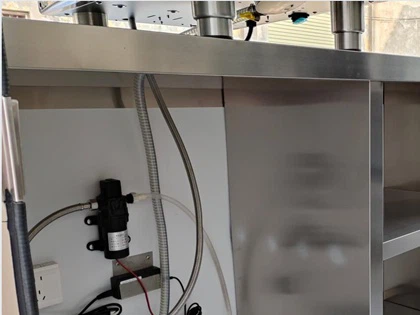
How It Works
A water pump is installed under the working bench.
You place one or two water barrels inside the cabinet.
We cut a clean round hole on the countertop.
The coffee machine's water hose passes through the hole and connects directly to the pump or water line inside the cabinet.
Why This Method Works So Well
- ✔ Simple, reliable design
- ✔ Easy to refill water barrels
- ✔ Keeps hoses hidden for a clean and professional look
- ✔ Works with almost all coffee machines
- ✔ Stable water pressure
- ✔ Great for busy locations and high-volume coffee service
This method gives your coffee machine a dedicated water source. It is especially useful if you expect to prepare espresso all day long, because the pump ensures constant pressure and flow rate.
Great for:
- Espresso trailers
- High-traffic locations
- Barista-style coffee setups
- Trailers with multiple appliances (coffee + sinks + ice maker)
Bonus Advantage
If you upgrade to a larger machine later, this water system already fits the next model.
At ETODEVICE, we pre-wire and pre-install the pump, switch, and water line so the machine can plug in immediately after delivery.
Method 2: Share the Same Water Line with the Sink (No Extra Pump Needed)
Some customers prefer a simpler setup, especially if they use a smaller coffee machine or limited equipment. In these cases, they often choose Option 2.

How It Works
- No extra pump is installed.
- Your sink already has a pump and a freshwater tank.
- We install a T-connector (also called a three-way connector).
- One side goes to the faucet.
- The other side is left ready for the customer's coffee machine.
Why This Method Works
- ✔ Fewer components
- ✔ Lower cost
- ✔ Less plumbing inside the trailer
- ✔ Easy for beginners
- ✔ Perfect for low to medium coffee volume
The coffee machine uses the same water supply system as your sink. Because the sink already has a pump, you don't need another one.
Great for:
- Small coffee carts
- Light-duty espresso machines
- Seasonal or weekend coffee businesses
- New owners with limited budgets
Important Note
If your machine requires strong or stable water pressure, Option 1 is usually better.
Option 2 works well for lighter coffee setups but isn't recommended for continuous high-volume espresso shots.
Which Option Should You Choose?
Here's a simple comparison to help you decide:
| Feature | Option 1: Dedicated Pump | Option 2: Shared Water Line |
| Water pressure | Strong & stable | Medium |
| Setup cost | Higher | Lower |
| Best for | Heavy espresso use | Light to medium coffee use |
| Maintenance | Easy | Very easy |
| Suitable for commercial machines | Yes | Sometimes |
| Clean installation | Excellent | Very good |
At ETODEVICE, we help customers choose based on:
- their machine type
- their menu
- expected customer flow
- budget
- local code requirements
There's no "one perfect solution"-only the solution that fits your coffee business.
What Else You Should Consider When Setting Up a Coffee Trailer
Aside from the plumbing itself, there are a few more things that make a big difference in your daily workflow.
(1) Power Requirements
Most commercial coffee machines need:
- 220V or 240V
- 15A–32A depending on the model
- A dedicated circuit
We upgrade the electrical system according to your machine's specifications, so you never overload the wiring.
(2) Cupboard Space for Water Tanks
You should plan space for:
- Fresh water barrel
- Waste water barrel
- Pump
- Filters (if needed)
We design the cabinet layout based on the size of your machine and how many cups you expect to serve per day.
(3) Ventilation & Heat Management
Coffee machines generate a lot of heat.
ETODEVICE installs:
- rear ventilation openings
- heat-resistant panels behind equipment
- optional extraction fans
This protects the machine and keeps your workspace comfortable.
(4) Drainage for Coffee Machines
Some machines require a small drain line.
We prepare:
- under-counter drainage ports
- sealed tubes
- odor-proof design
This keeps the inside of the trailer fresh and hygienic.
(5) Water Filtration
Even if your city water is clean, water inside a trailer is different.
We often install:
- sediment filters
- carbon filters
- scale filters
This helps prevent limescale and extends the lifespan of your espresso machine.
Why Many Coffee Business Owners Choose ETODEVICE
There are many coffee trailers on the market today, but few manufacturers understand the real technical demands behind coffee equipment. At ETODEVICE, we've worked with customers from over 60+ countries, many of them running professional espresso setups.
Here's why people trust us:
- ✔ Experience building hundreds of coffee trailers
- ✔ Professional plumbing design
- ✔ Electrical layout tailored to coffee machines
- ✔ Smooth installation and clean finishing
- ✔ Custom countertop cutouts for equipment
- ✔ Fast production & global shipping
- ✔ Full customization based on your machine model
From 2-group commercial machines to compact portable brewers, we've installed them all.
Real Customer Example
A customer from Europe purchased a customized espresso trailer and used Option 1.
We installed:
| pump | clean water line | drainage for the drip tray | 220V circuit | ventilation panel |
After delivery, the customer sent us a video pulling the first espresso. The machine reached pressure instantly, the water line was stable, and the shots were consistent-exactly how a professional setup should work.
This is what we aim for with every build.
Summary: The Best Way to Install a Coffee Machine in a Trailer
Running a coffee trailer isn't just about good beans or creative drinks. It's about building a workspace that supports your equipment and makes your daily operations smooth.
To make your coffee machine work properly inside a food trailer, you have two reliable options:
Option 1: Install a dedicated pump under the counter
Best for busy espresso setups, commercial machines, and high-volume sales.
Option 2: Share the trailer's water line using a T-connector
Best for small or medium coffee operations or for owners with a lower budget.
Both methods work well. The right choice depends on your machine and your business goals.
At ETODEVICE, we design and build coffee trailers that are practical, durable, and ready for long-term operation. Whether you already have a coffee machine or need help choosing the right one, we make sure your setup fits your workflow from day one.


